Starting something new
You are shaping an assistant, copilot, agent, or generation product and need the interaction, context, actions, and safeguards designed as one system.
Service 02
Build assistants and agentic systems that can use the right context, take bounded actions, and show when human judgment is required.
Where the work can begin
You are shaping an assistant, copilot, agent, or generation product and need the interaction, context, actions, and safeguards designed as one system.
You have a chatbot or automation that demos well but lacks reliable grounding, evaluations, permissions, recovery, or human control.
When this helps
Inside the engagement
Design how the system finds, cites, refreshes, and limits the business knowledge used in each response.
Connect models to APIs and workflows through bounded actions, typed inputs, and recoverable state.
Create representative test sets and measurable checks for quality, grounding, safety, latency, and cost.
Make uncertainty, approvals, overrides, audit trails, and escalation visible in the product experience.
What leaves the room
We design the workflow around evidence, permissions, and recoverable actions. Model choice follows the product requirements rather than defining them.
Working sequence
Define what the system may know, decide, recommend, draft, or do.
Connect the minimum context and tools required for a representative end-to-end task.
Test adversarial, ambiguous, stale, and incomplete cases before widening capability.
Add monitoring, review queues, cost controls, fallback behavior, and clear ownership.
Operating boundaries
Evidence in the work
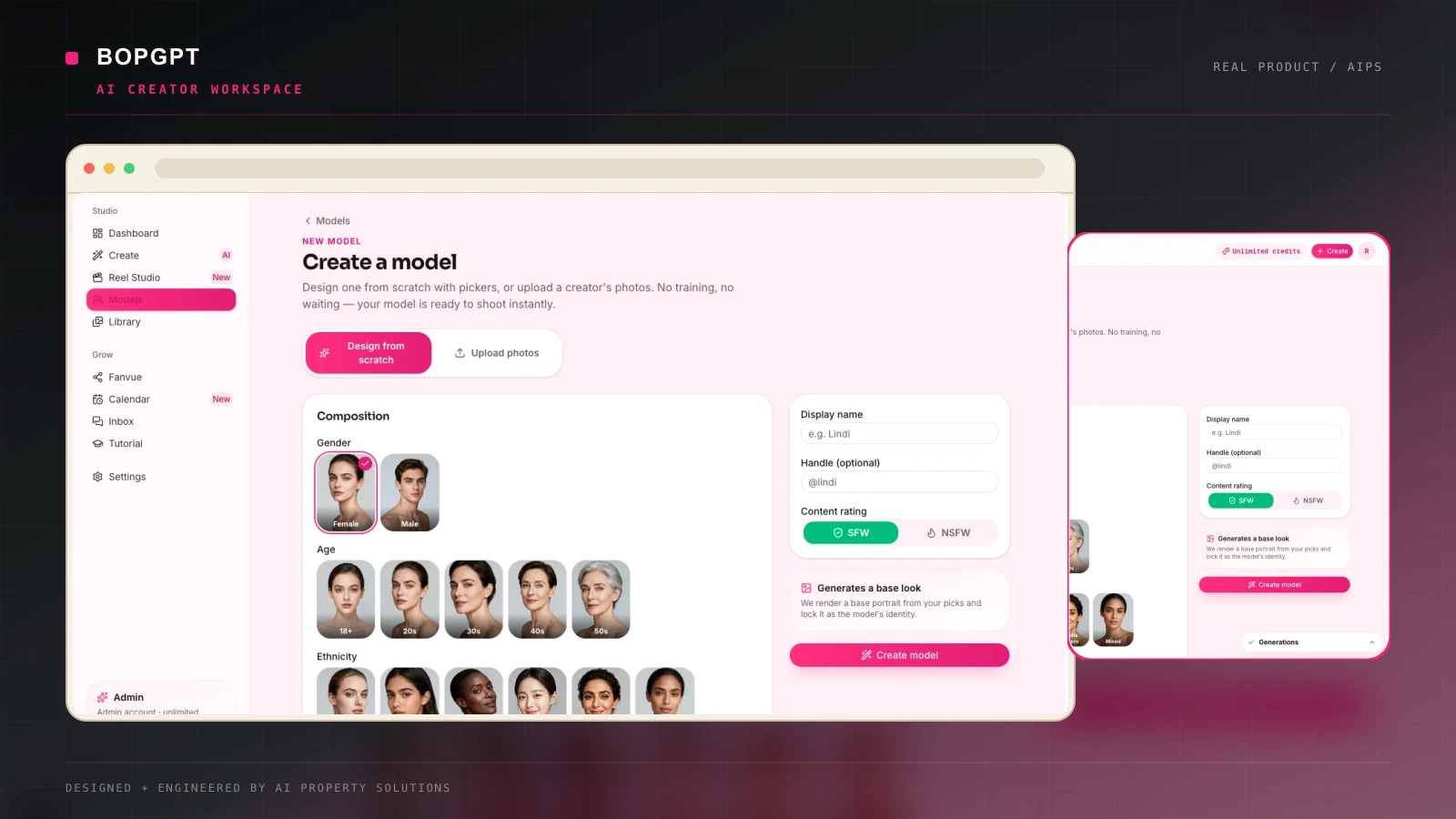
Creator tools · AI workspace
An AI creator workspace spanning model setup, guided prompt creation, content libraries, publishing workflows, moderation, and production operations.
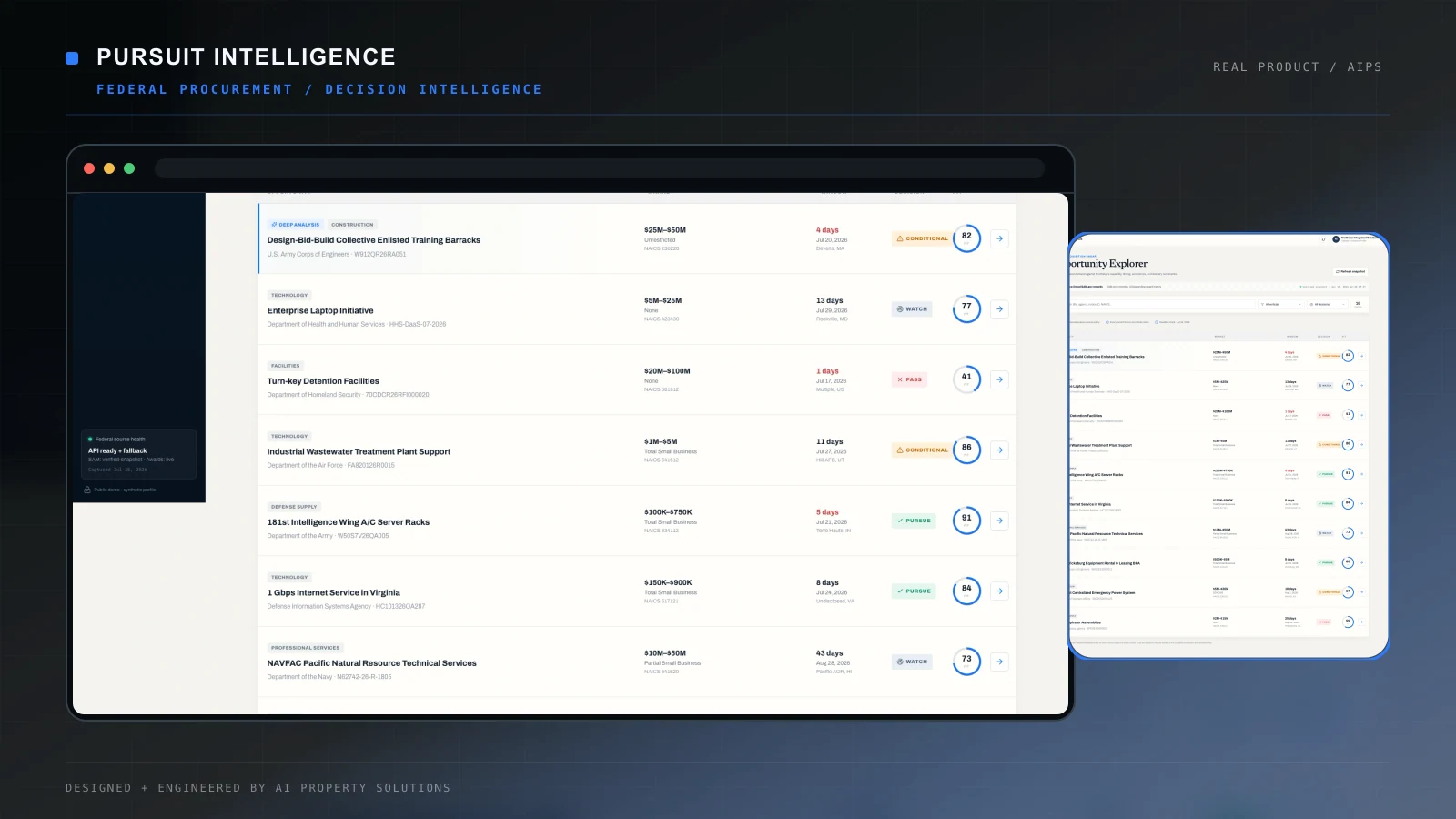
Federal procurement · Decision intelligence
An evidence-led bid decision platform connecting public opportunities, solicitation findings, pricing scenarios, supplier review, risk, and human-approved pursuit decisions.
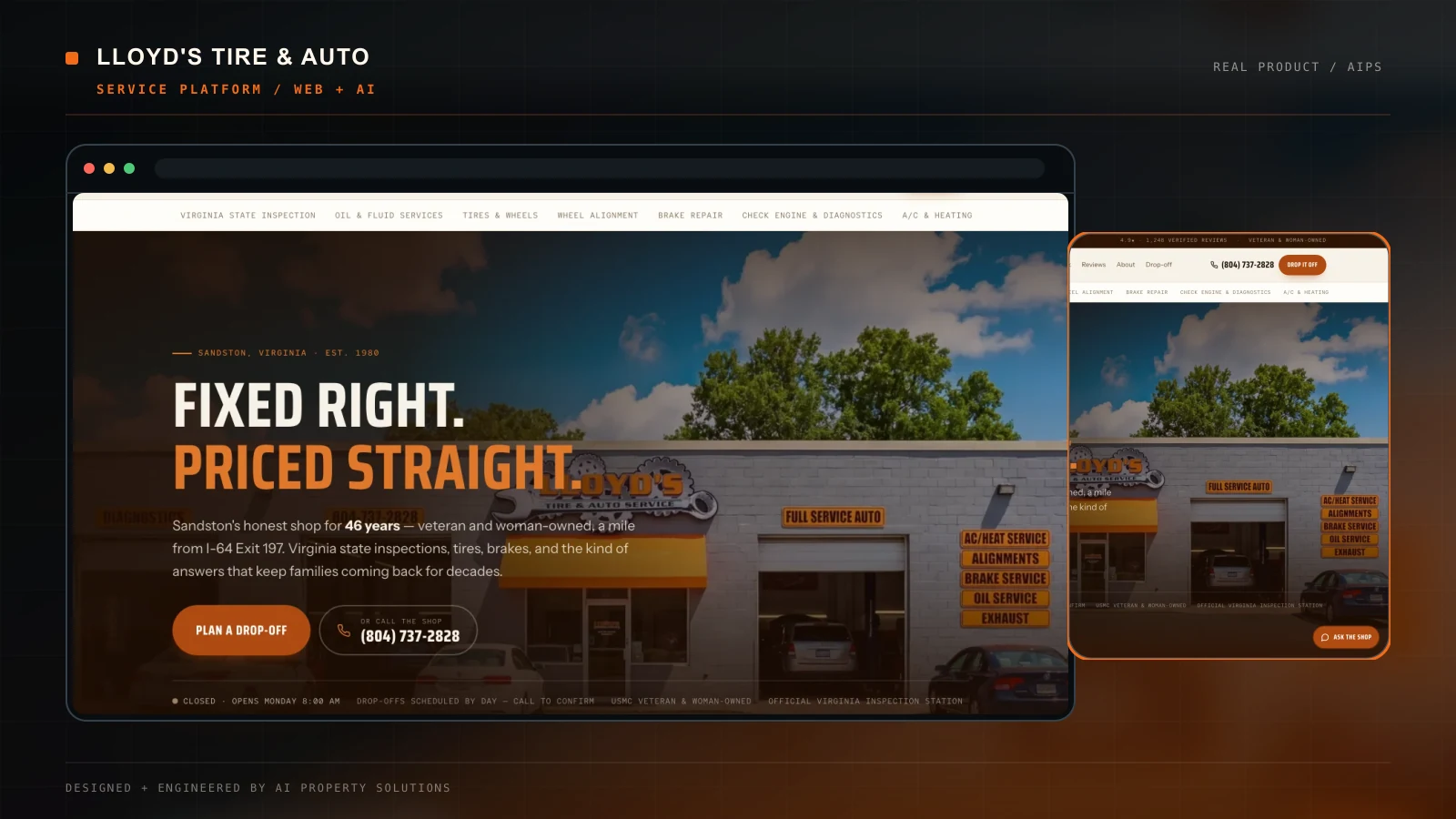
Local service · Web + AI
A modern local-service platform with a clearer customer journey, local search foundations, a guarded AI shop assistant, and a request-based drop-off experience.
Questions about this service
Both. The interface follows the job. Some systems answer and explain; others use tools across a bounded workflow with approvals and recovery.
Yes. We can preserve an existing provider when it fits, or compare alternatives against quality, latency, cost, privacy, and operating requirements.
Readiness comes from representative evaluations, visible failure behavior, security and permission checks, operating controls, and acceptance in the real workflow—not a polished demo alone.
Start a conversation
Tell us what you are trying to change, who it affects, and where the work stands today. We will give you an honest read on fit and the most useful next step.
Start a project