Starting something new
You need the data contracts, APIs, cloud architecture, security, and operating model that will let an intelligent product survive beyond its first demonstration.
Service 04
Create the data contracts, cloud infrastructure, monitoring, and operating boundaries that keep an intelligent product useful after launch.
Where the work can begin
You need the data contracts, APIs, cloud architecture, security, and operating model that will let an intelligent product survive beyond its first demonstration.
You have a product constrained by fragile ingestion, unclear ownership, provider coupling, missing observability, or release processes that do not prove real readiness.
When this helps
Inside the engagement
Build ingestion, normalization, identity, provenance, quality, and checkpoint systems around changing source data.
Design APIs, storage, queues, background work, caching, authentication, and cloud boundaries for the product.
Create repeatable builds, environment separation, migrations, health checks, rollback paths, and acceptance records.
Make failures, cost, provider limits, ownership, and recovery visible after deployment.
What leaves the room
We separate code readiness, deployed state, provider configuration, and real-world acceptance. That makes risk visible and gives the product team a reliable next action.
Working sequence
Map current data, services, environments, providers, dependencies, and failure history.
Protect critical paths with contracts, checkpoints, security boundaries, and reproducible builds.
Verify the deployed route, representative data, failure handling, and recovery behavior.
Document monitoring, credentials boundaries, release gates, unresolved risks, and the next safe action.
Operating boundaries
Evidence in the work
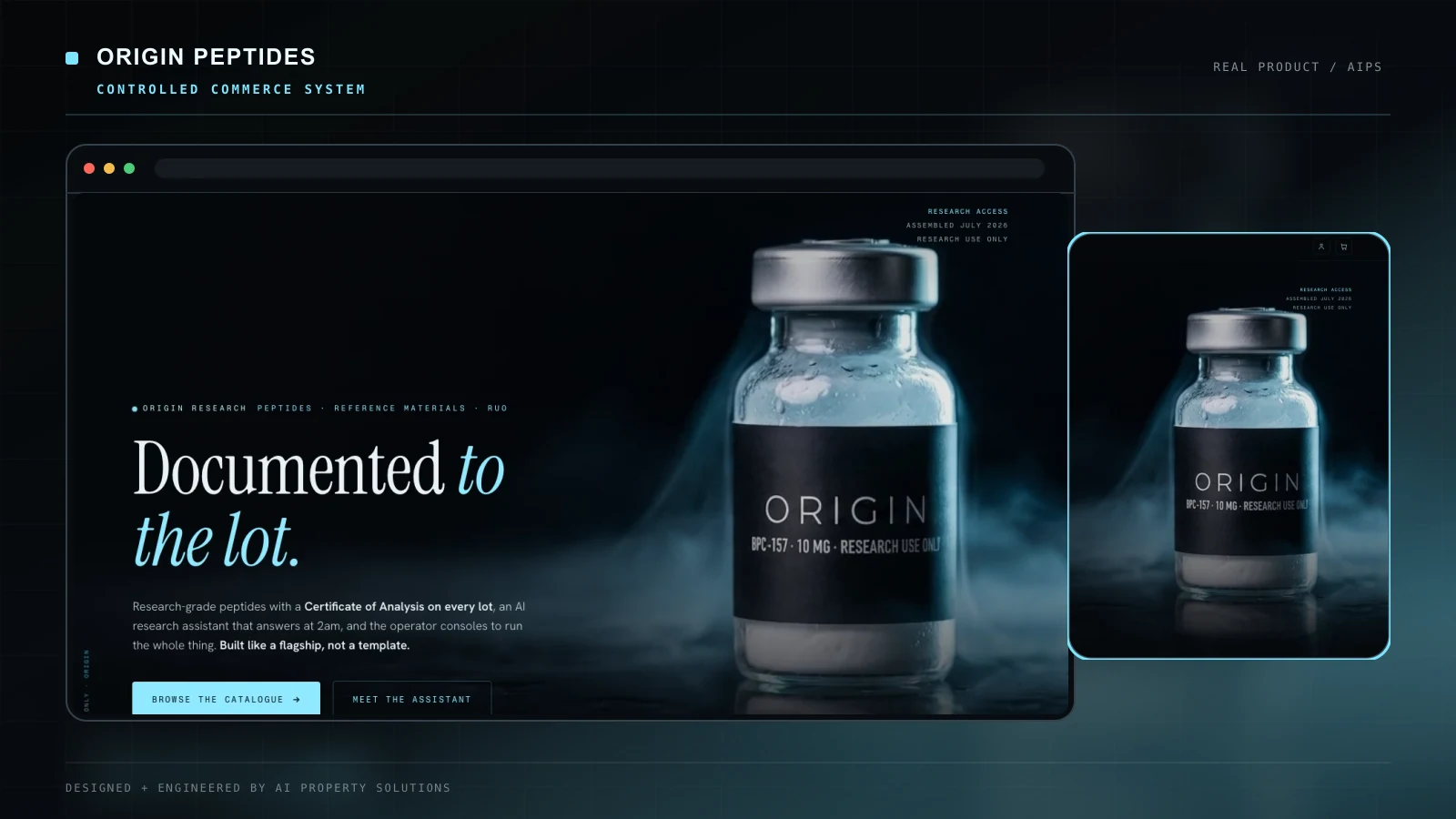
Research operations · Secure infrastructure
A controlled research storefront and operations system supported by hardened server functions, product content, role boundaries, and fail-closed commerce safeguards.
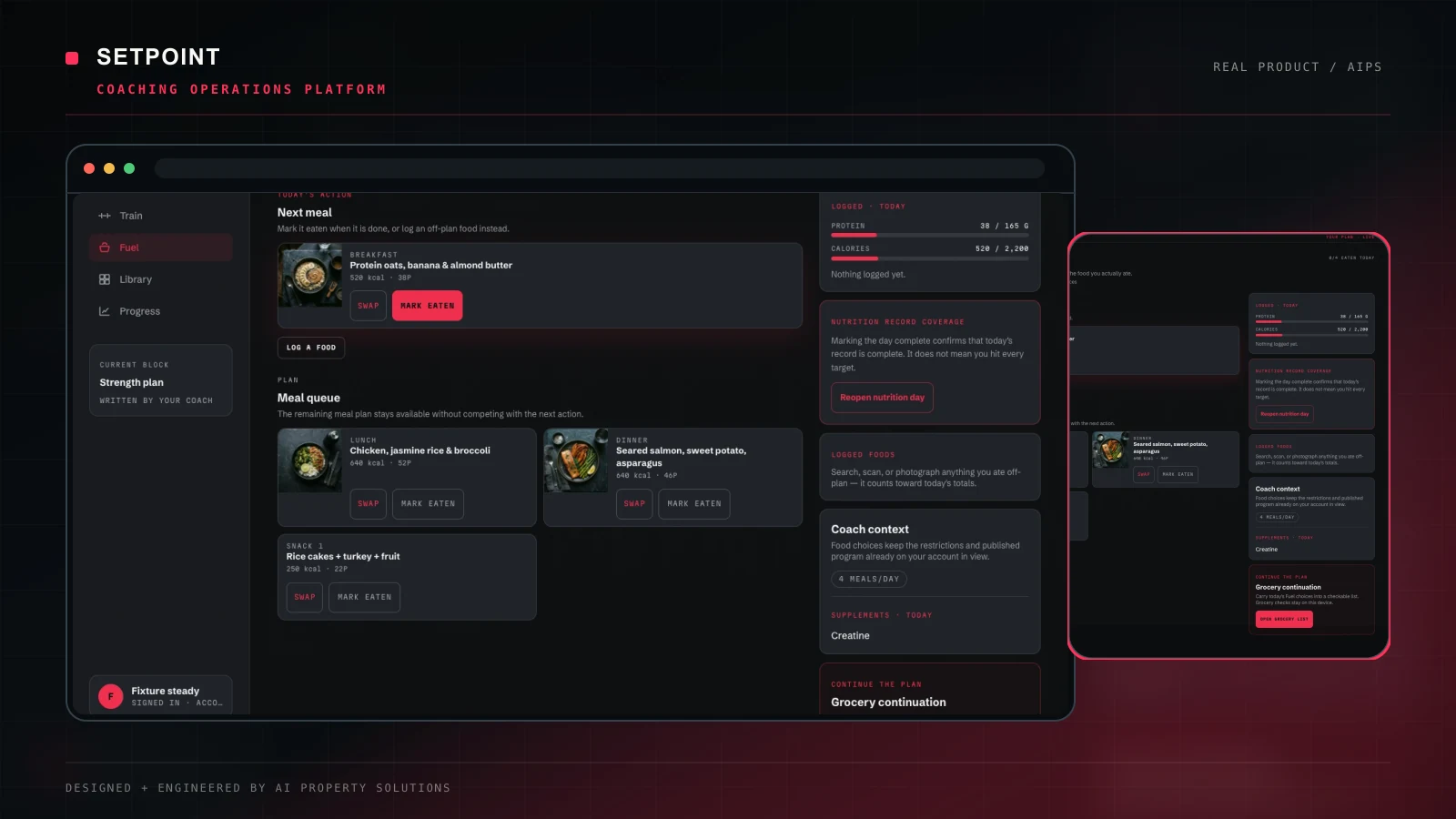
Fitness · Coaching operations
A live coaching platform connecting member plans, nutrition, progress evidence, trainer workflows, scheduling, and privacy-aware operational controls.
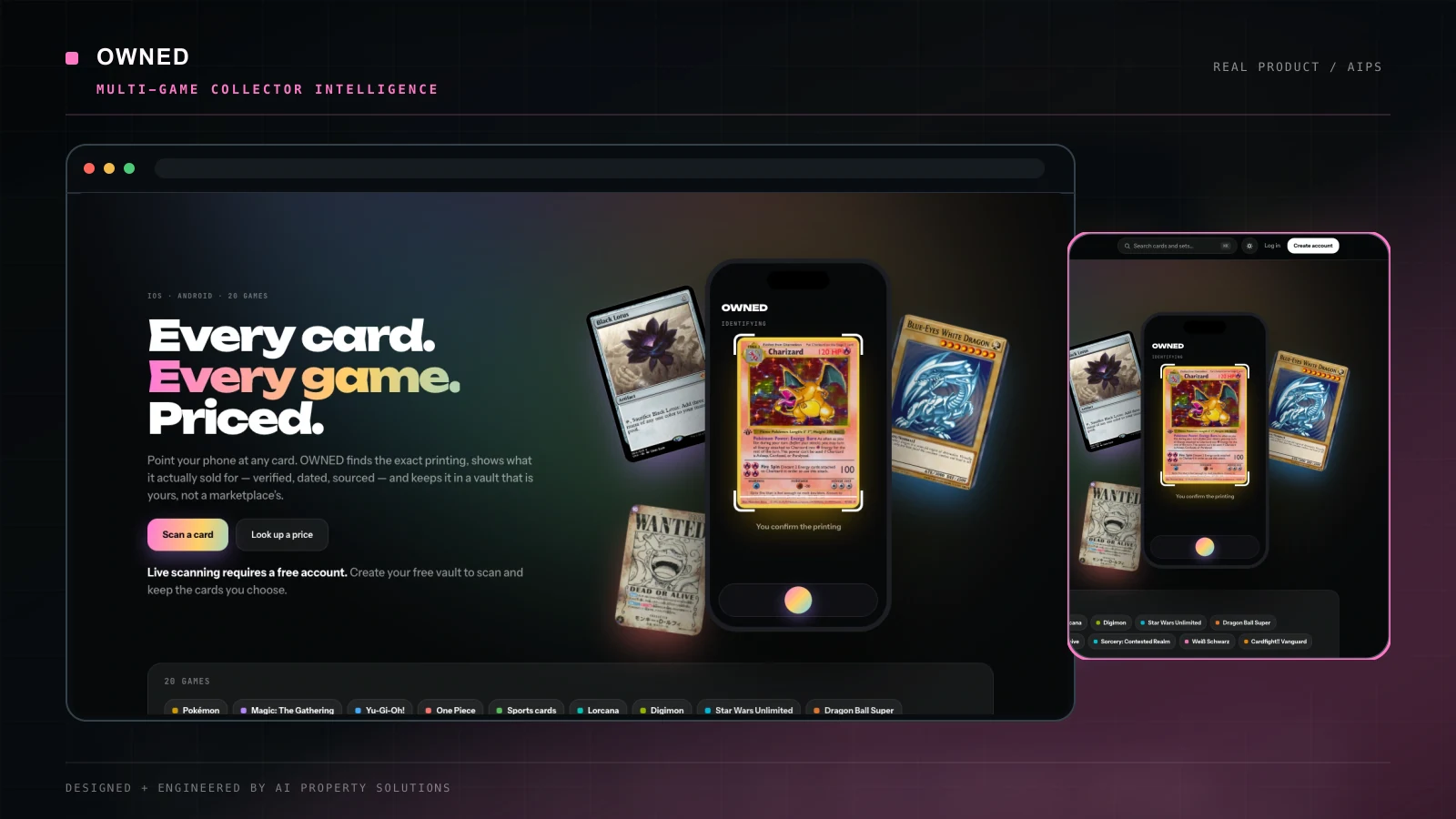
Collectibles · Multi-game intelligence
A collector-first web and mobile platform for scanning cards across games, confirming exact printings, tracking collection value, comparing market evidence, organizing inventory, and setting alerts.
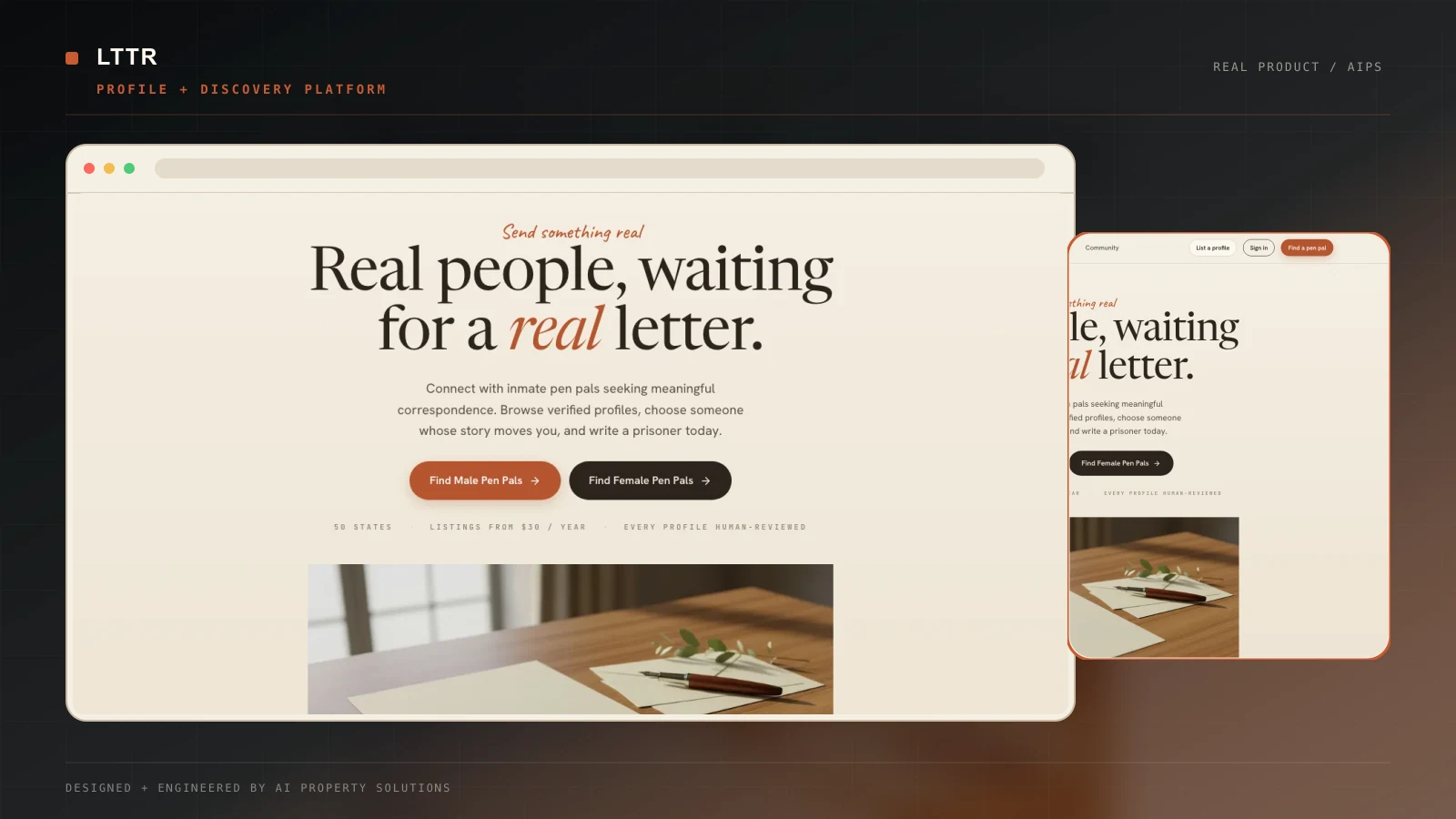
Pen pals · Discovery platform
A pen-pal profile and discovery platform with evidence-aware payment verification, editorial review states, and structured distribution workflows.
Questions about this service
Yes. We begin with the current environments, data paths, failure history, and ownership boundaries, then prioritize the smallest changes that improve reliability and recoverability.
Yes when it is in scope. We treat application code, deployed revision, provider configuration, and real-world acceptance as separate checkpoints so the status remains honest.
Usually. We work across common cloud and application platforms and make a change only when the operating benefit justifies the migration cost and risk.
Start a conversation
Tell us what you are trying to change, who it affects, and where the work stands today. We will give you an honest read on fit and the most useful next step.
Start a project